The Basics
Species:
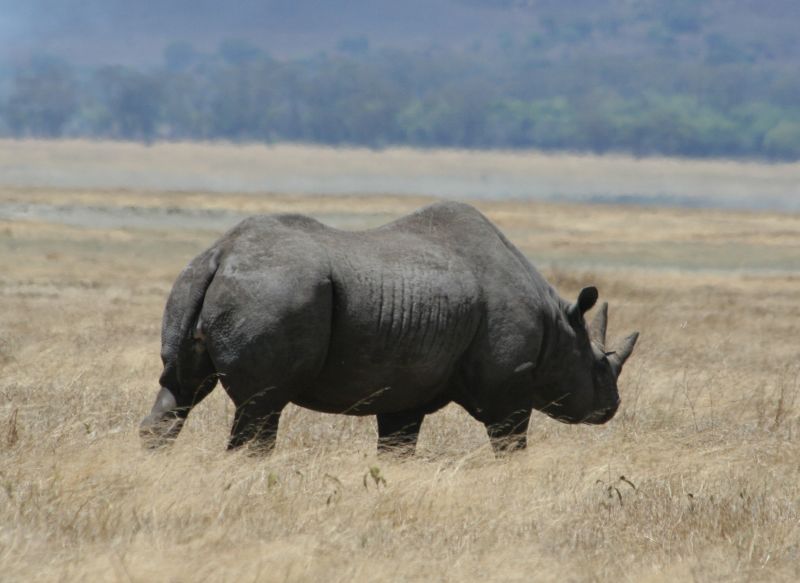
The different surviving species of rhino include the White Rhino, Black Rhino, Sumatran Rhino, Javan Rhino and the Indian Rhino.
Status: Endangered
Rhinos are ranked among the most endangered species in the world—some species of the rhino like the White Rhino have been brought back from the brink of extinction though they are still considered “threatened”, but there are other species such as the Javan Rhino that have 35-55 known surviving individuals in the world.
They are listed in Appendix I of CITES—Convention on International Trade in Endangered Species of Wild Flora and Fauna which is an international treaty with more than 144 countries taking part. Species listed in Appendix I can’t be traded commercially; those listed in Appendix II can only be traded commercially if it does not harm their survival.
Population (totals averaged from different sources):
White Rhino (Ceratotherium Simum): 12,227
Black Rhino (Diceros Bicornis): 3,690
Sumatran Rhino (Dicerorhinus Sumartrensis): 250
Javan Rhino (Rhinoceros Sondaicus): 52
Indian Rhino (Rhinoceros Snicornis): 2,608
Size and weight:
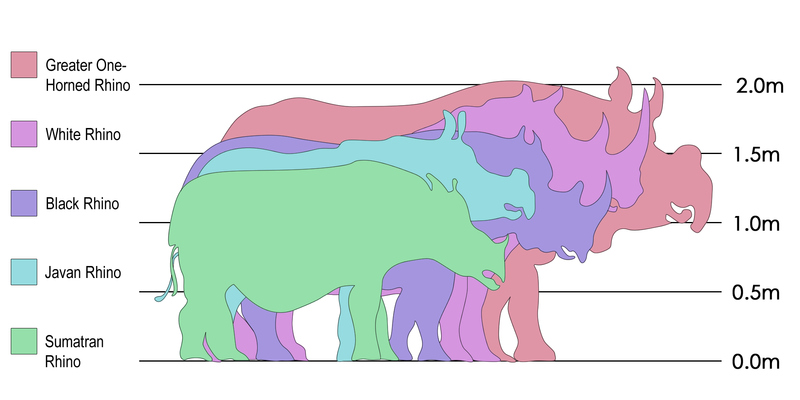
Rhinos are one of the biggest mammals on this planet. The white rhino is the largest mammal after the African elephant. All five species of rhinos can weigh as “little” as 750 pounds (340.2 kg) up to 8,000 pounds (3,638.7 kg). The height varies depending on species, from 4.5 feet (1.4 m) to 6 feet (1.8 m) tall.
The Indian Rhinoceros—over 1.8m
The White Rhinoceros—1.8m
The Black Rhinoceros—over 1.5m
The Javan Rhinoceros—1.5m
The Sumatran Rhinoceros—1.4m
Vocals:
The rhino has a “vocabulary” of growls, grunts, squeaks, snorts and bellows. For the actual sounds, you can visit http://www.thewildones.org/Conflict/rhino.html
Food:
Rhinos are herbivores—they only eat plants and would never touch meat. Some rhinos (especially those with square-shaped lips) more suitable to graze on grass; others prefer to eat the foliage of trees or bushes.
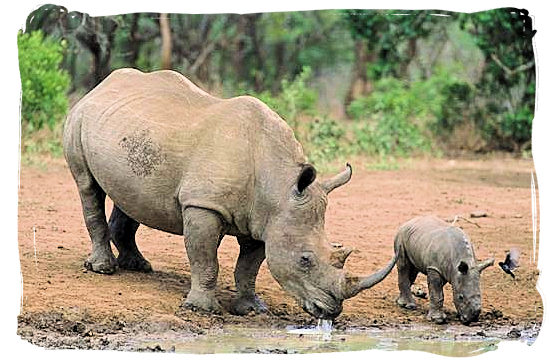
Life Span: 30 years, in capacity 40 years.
Physical Features:
Rhinos have poor eyesight, and may often charge without apparent reason, however, their sense of smell and hearing can make up for this factor. Rhinoceroses are universally recognized as massive bodied, stumpy-legged creatures with one or both of their dermal horns. In some species of rhinos, the horns may be short or altogether not obvious.
The rhino is what we call an “odd-toed ungulate”—cousin to the horse and the tapir. As it walks, only two of the three toes function right. Those with bland gray skin are camouflaged with stones and sometimes on glimmering water.
Behavior:
Rhinos may be rather ill tempered, and are more so in areas that they are constantly disturbed in. They are strong enough to overturn a jeep, and use their horns not only in battle for territory or females, but also to defend themselves from lions, tigers and hyenas.
Rhinos deposit their dung to mark out their territory. They are usually active in the evening, through the night and early in the morning—during the day, they may rest several kilometers from their waterholes under dense cover. Rhinos are known to sleep both standing and lying on the ground; because the rhino has no sweat glands, it keeps cool by rolling in different liquids and are fond of wallowing in muddy pools or sandy river beds. Even though they travel, the rhino still prefers to drink from the same pool.
The rhino lowers its head, snorts, and breaks into a gallop that can reach speeds such as 30 miles/hr (48.2 km/hr) when attacking. It then uses its horn to gore or strike powerful blows at its opponent. Though the rhino may be big and heavy, it is still very agile and can turn quickly in small spaces.
Breeding:
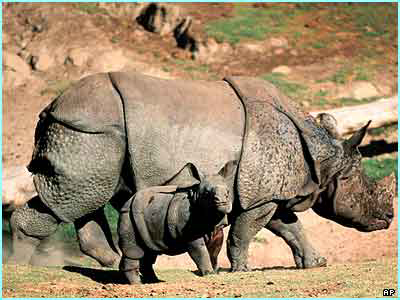
Males and females fight frequently during courtship—fights sometimes lead to serious wound that are inflicted by their horns. Rhinos don’t mate for life, and separate before the calf is born 14 to 18 months later. Though the calves nurse for a year, they are already able to begin eating vegetation 1 week after birth.
