Methods of Protection
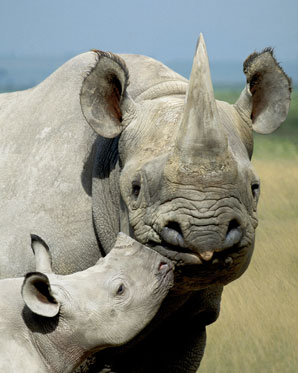
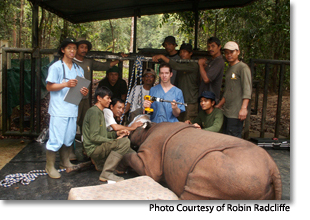
Some researchers are studying rhinos to see how humans can increase the population of these rhinos.
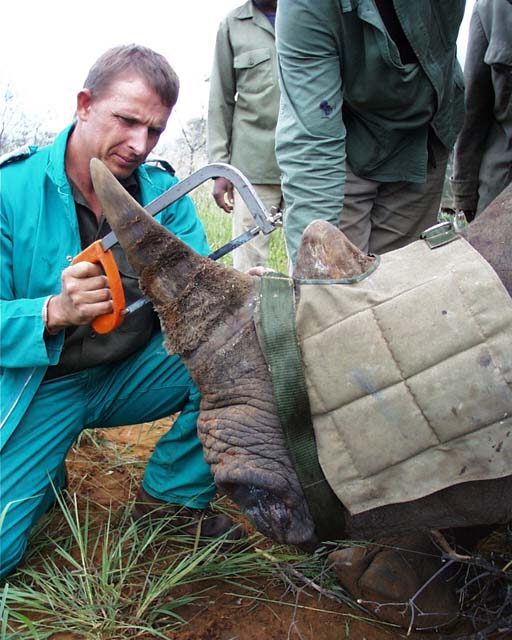
All trade in rhino horn is prohibited, since rhinos are protected under Appendix I of CITES. The ban on trade in rhino horns has not been very successful, however. A thriving black market in rhino horn has continued.
In 1993, the United States threatened to ban legal imports of wildlife from China, which has a large wildlife trade with the United States, if China did not start taking measures to stop illegal wildlife trade. In response, China made it illegal to sell, buy, trade, or transport rhino horns and tiger bones. Illegal stockpiles of rhino horns and tiger bones remain, however.
Protection of elephant habitat was not enough. Rhinos were killed in protected areas because governments could not afford to patrol the parks to stop poachers.
In the white rhinoceros, subfertility (lack of normal reproductive cyclicity, mate incompatibility, conception failure and pregnancy loss) is a major challenge.
Captive black rhinoceroses (unlike their free-ranging counterparts or the captive white rhino) develop unusual diseases that adversely effect animal health.
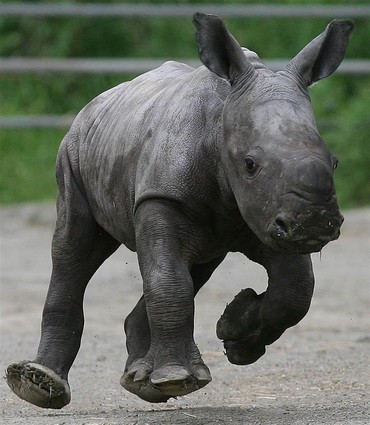
In all species of rhino, high stillbirth rates continue to plague our ability to propagate these species.
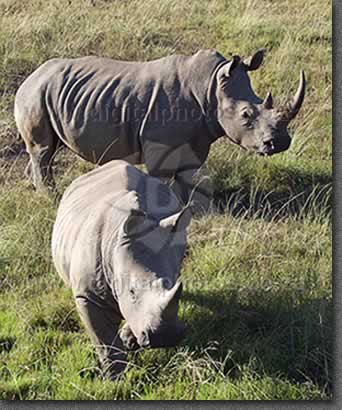
"Tidbits"
The rhino has a symbiotic relationship with ox peckers [cattle egret?], also called tick birds. In Swahili the tick bird is named "askari wa kifaru," meaning "the rhino's guard." The bird eats ticks it finds on the rhino and noisily warns of danger. Although the birds also eat blood from sores on the rhino's skin and thus obstruct healing, they are still tolerated
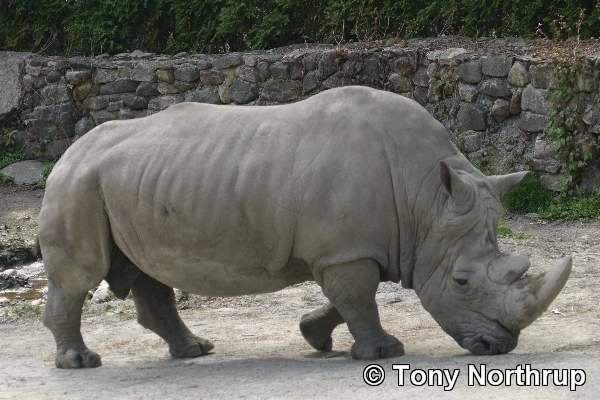
People thought that the rhinos horn is made of ivory, but it is isn't. In fact, the horn is made of packed together strands of hair called keratin.
May be the source of the belief in unicorns, legendary animals whose horn was said to be a panacea for all types of ailments. In 1298, the Venetian explorer Marco Polo described Sumatran rhinos as unicorns saying:
“There are wild elephants in the country, and numerous unicorns, which are very nearly as big. They have hair like that of a buffalo, feet like those of an elephant, and a horn in the middle of the forehead, which is black and very thick."
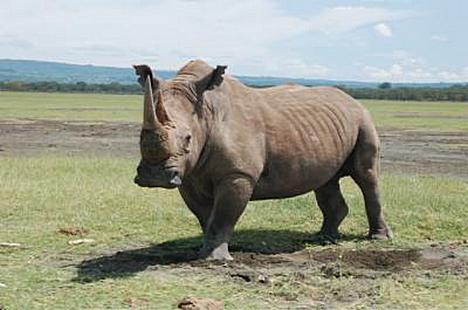
As early as the 5th century B.C., rhino horn was believed capable of rendering some poisons harmless. In Borneo, people used to hang a rhino's tail in a room where a woman was giving birth, believing it would ease labor pains. Asians used rhino horn in traditional medicines for a thousand years without threatening the species' survival.
Egrets and other birds can be found with rhinos, feeding on the species external parasites.