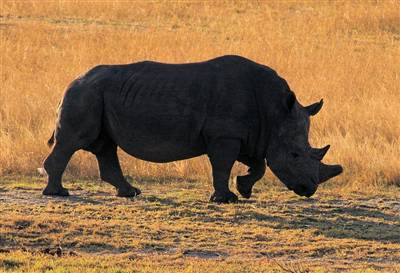
Rhino in Danger
Since 1970 the world rhino population has declined by 90 percent, with five species remaining in the world today, all of which are endangered. 11,000 rhinos are currently left in the wild.

An extinct species of rhino that lived in Mongolia, (Baluchitherium grangeri), was the largest land mammal of all time. This hornless rhinoceros stood 18 feet (five and one-half meters) at the shoulder, was 27 feet (eight meters) long, and probably weighed 25 tons (23 metric tons), four times as much as today's African bull elephant. However, their extinction was probably due to climate change, whereas rhinos of nowadays are probably going to die out because they were poached...by us.

The rate of their decline is truly astounding: in the decade of the 1970s alone, half the world's rhino population disappeared. Today, less than 15 per cent of the 1970 population remains, an estimated 10,000 to 11,000 worldwide.
There currently are only 3,100 black, 11,700 white, 2,400 Indian, 300 Sumatran, and 60 Javan rhinos living in the wild, with a global captive population of about 1,200 (250 black, 780 white, 140 Indian, 15 Sumatran).
Their Values
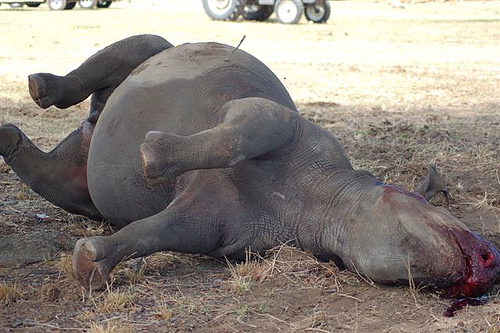
Valued for their horns, they face a serious threat from poaching. Some cultures believe that the powdered rhino horn will cure everything from fever to food poisoning and will enhance sexual stamina.
Unlike most large mammals, habitat loss has not been a significant factor in the decline of rhinos. Rather, poaching for their horn has decimated rhino populations.
The result was a seven-fold increase in the per capita income in Yemen, a rise in wealth that made rhino horn dagger handles within the reach of almost everyone. This small country, with a population of 6 million at the time, suddenly became the world's largest importer of rhino horn.
It was not until the 1970s that rhinos declined dramatically, due to a surprising cause: the soaring price of oil. Young men in the Arab country of Yemen covet rhino horn for elaborately-carved dagger handles, symbols of wealth and status in that country. Until the 1970s, few men could afford these prized dagger handles. But Yemen and other Middle Eastern countries are rich in oil, and prices for this "black gold" climbed dramatically in that decade due to a worldwide oil shortage.
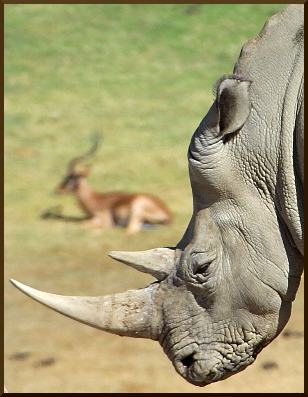
The value of rhino horn made it enormously profitable to poach rhinos and sell them on the black market. For example, in 1990, the two horns from a single black rhino brought as much as $50,000. Just like poaching for elephant ivory, poaching for rhino horn is simply too profitable for many subsistence farmers and herders to resist.

The rhino's plight has become so desperate that in some places conservation officials tranquilize rhinos and saw off their horns so poachers will have no cause to kill them. It is not known whether removing the horn impairs the rhino's ability to survive or reproduce.
Rhino horn is so valuable though, that poachers have killed guards to get at the rhino.